
Hostile Architecture's Grip on UK Streets
- David Cruzat
- Apr 24, 2024
- 3 min read

Updated: Apr 28, 2024
The issue of homelessness and hostile architecture remains a persistent challenge in the UK. Despite ongoing public outcry against metal spikes and other anti-homeless measures, the presence of such design elements persists, highlighting the need for continued conversations and action. Researchers, Dobson and Turnbull, suggests a growing public empathy towards homeless individuals, presenting an opportune moment for both civil society and decision-makers to address this longstanding problem (Dobson and Turnbull, 2022; de Fine Licht, 2020; Petty, 2016).
Understanding Hostile Architecture
Hostile architecture, also known as defensive architecture, encompasses various design elements intentionally installed to restrict certain activities, through the use of small devices on handrails to concrete spikes and bench dividers to deter rough sleeping or loitering (Morton, 2016).
Some examples of hostile architecture in urban environments are:
Spikes:
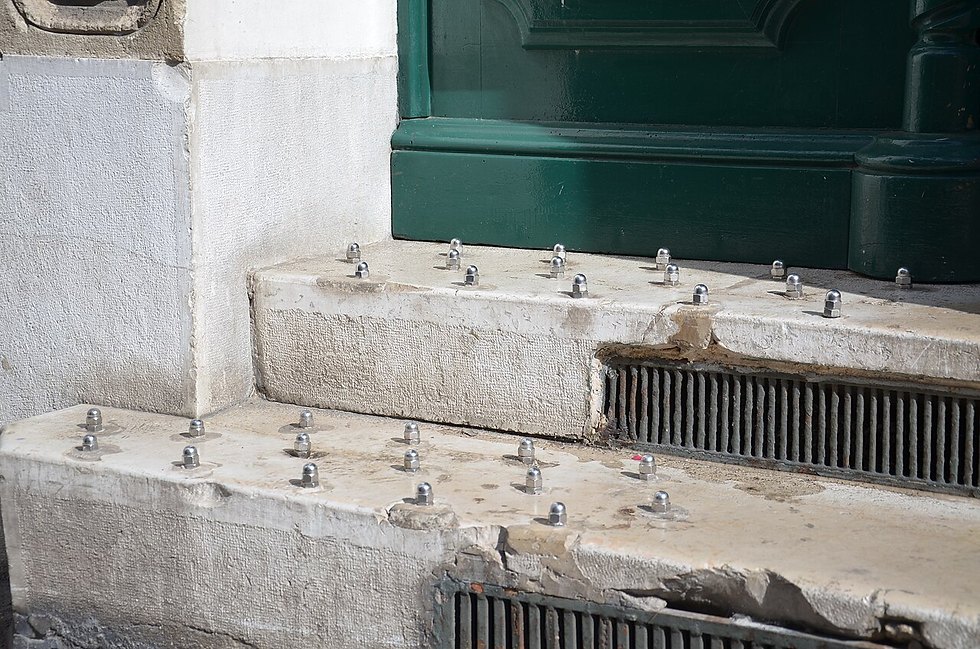
Examples: Spikes installed outside private properties and public spaces.
Purpose: Spikes are often placed on flat surfaces to deter individuals from sitting or sleeping in these areas, as they aim to prevent rough sleepers from seeking refuge in alcoves or doorways, effectively making these spaces uncomfortable or inaccessible for extended periods (McFadden, 2020).
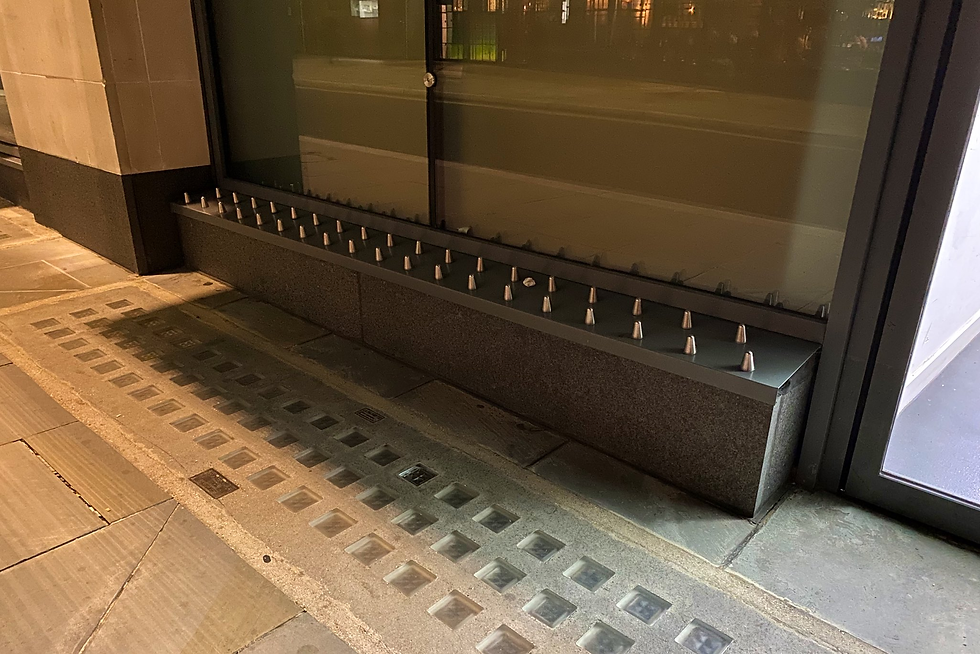
Photograph of Anti-homeless spikes in 10 Old Bailey, London (Dunn, 2021).
Bench modifications:
Examples: Installation of armrests, central dividers or angled seating on benches.
Purpose: Bench modifications are designed to limit the usability of seating areas for individuals seeking rest or shelter. Armrests and central dividers prevent individuals from lying down, while angled seating makes prolonged sitting uncomfortable, which these aim to discourage rough sleepers from using benches as makeshift beds (McFadden, 2020).

Photograph of modified bench aimed to deter rough sleeping (Borkwood, 2019).
Hostile Landscaping:
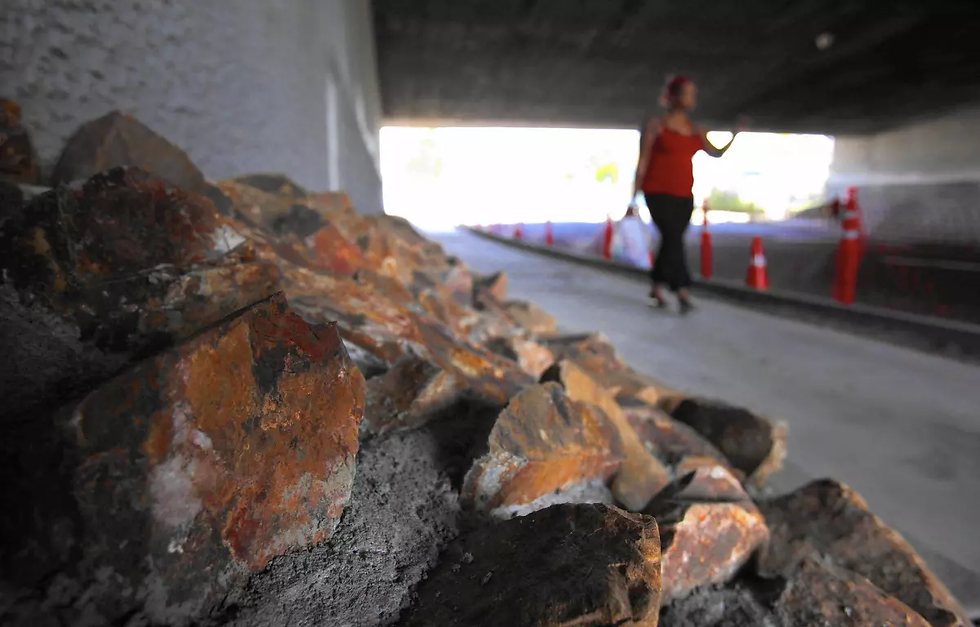
Examples: Planters, bollards, jagged rocks, or low walls strategically placed in open spaces.
Purpose: Hostile landscaping involves the placement of physical barriers to restrict access or discourage congregation in public areas. These landscaping features aim to control pedestrian movement and limit opportunities for rough sleeping in urban environments (McFadden, 2020).

Photograph of placed rocks under a bridge to stop the homeless from sleeping there, Düsseldorf, Germany (HostileArchitecture, n.d.)
Harsh Lighting:
Examples: Bright and direct lighting installed in public spaces, under bridges, and in alleyways.
Purpose: Harsh lighting is often used as a deterrent to discourage individuals from loitering or engaging in undesirable activities in public areas, as they aim to create discomfort for those seeking shelter or privacy, making it less appealing for rough sleepers to linger in these spaces (Kohlstedt, 2018).

Photograph of blue restroom lighting to intravenous drug users (Unpleasant Design, 2016).
Specifically in the UK, the use of hostile architecture gained widespread attention in the 2010s, particularly with the installation of metal spikes outside private properties and businesses. Despite the public backlash and media scandals, instances of anti-homeless architecture persists across cities like London, where concrete spikes and metal deterrents are commonplace (Korneev, 2023).
All in all, addressing hostile architecture necessitates an adaptable approach that involves both state intervention and public activism. While state prohibition is desirable, its limitations highlight the need for grassroots efforts to counter anti-homeless architecture, for example, the success of initiatives like the 2014 change.org petition demonstrates the power of public campaigns to effect change at a local level. As discussed, hostile architecture not only exacerbates exclusion and dehumanisation but also reflects broader societal attitudes towards homelessness. By raising awareness and mobilising public support, we can challenge these practices and foster a more inclusive urban environment, dismantling the barriers created by hostile architecture and uphold the dignity of all individuals within our communities.
Comments