
The Hidden Costs of Hostile Architecture: Redirecting Investments for Positive Change
- David Cruzat
- Apr 24, 2024
- 3 min read

Updated: Apr 28, 2024
In cities around the world, hostile architecture has become a significant presence in public spaces, aimed at deterring "undesirable" behaviour, from anti-homeless spikes to bench dividers, these design elements not only reinforce inequality but also come at a significant cost - both financially and morally (O'Shea and Awwad-Rafferty, 2009, p.27).
The Financial Toll
Hostile architecture may seem like a cost-effective solution to urban problems, but the reality is far more complex, as the installation and maintenance of these hostile infrastructures come with a hefty price tag, draining resources that could be allocated towards a support infrastructure that gets individuals off the streets, rather than cause more damage to them (Fraieli, 2021).
Cities across the United States allocate significant financial resources towards the implementation of hostile architecture, as highlighted in the 2017 report, "Tent City USA" by the National Law Center on Homelessness and Poverty. For instance, San Diego, CA, spent a staggering $57,000 on installing jagged rocks underneath an overpass in preparation for the Major League Baseball All-Star game. Similarly, Chicago, IL, opted to fence off areas under bridges to deter homeless individuals from seeking shelter there. Despite these costly measures, the underlying need for shelter remains unaddressed, leaving vulnerable individuals at increased risk of exposure and hazards. Another example is Santa Cruz spent $1,000 per speaker box to emit high-pitch sounds under a local bridge, aimed at deterring loiterers (Fraieli, 2021; KSBW Action News 8, 2014).
This expenditure reflects a misguided approach that prioritises punitive measures over proactive solutions, diverting resources away from initiatives that could provide meaningful support and assistance to those experiencing homelessness. Ultimately, the long-term economic consequences of hostile architecture can far exceed the initial investment.
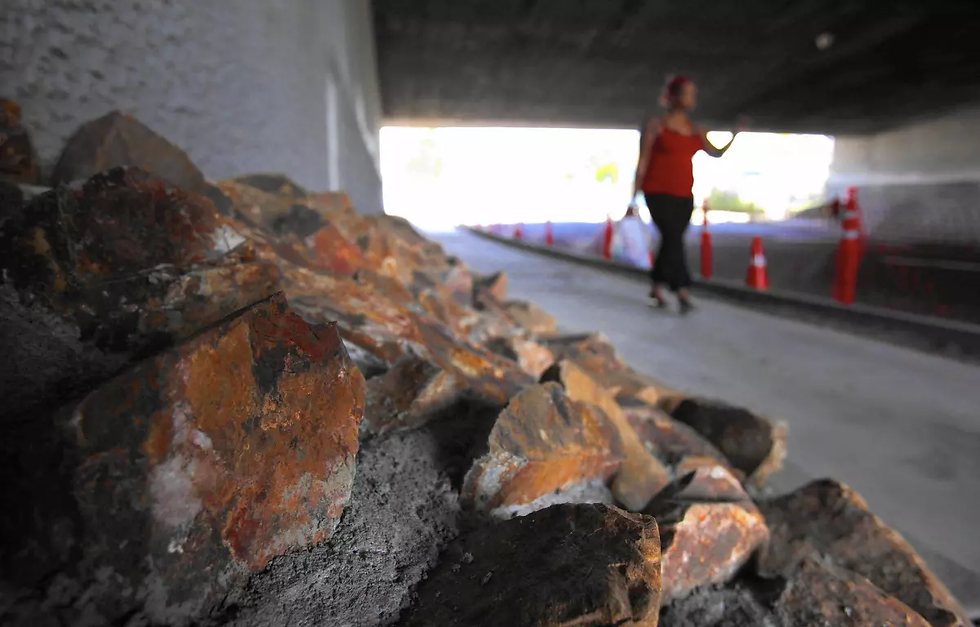
Photograph by John Gastaldo / San Diego Union-Tribune of the hostile architecture, jagged rocks, next to the walls of a freeway overpass in San Diego (Gastaldo, 2016).
The Public Perception Cost
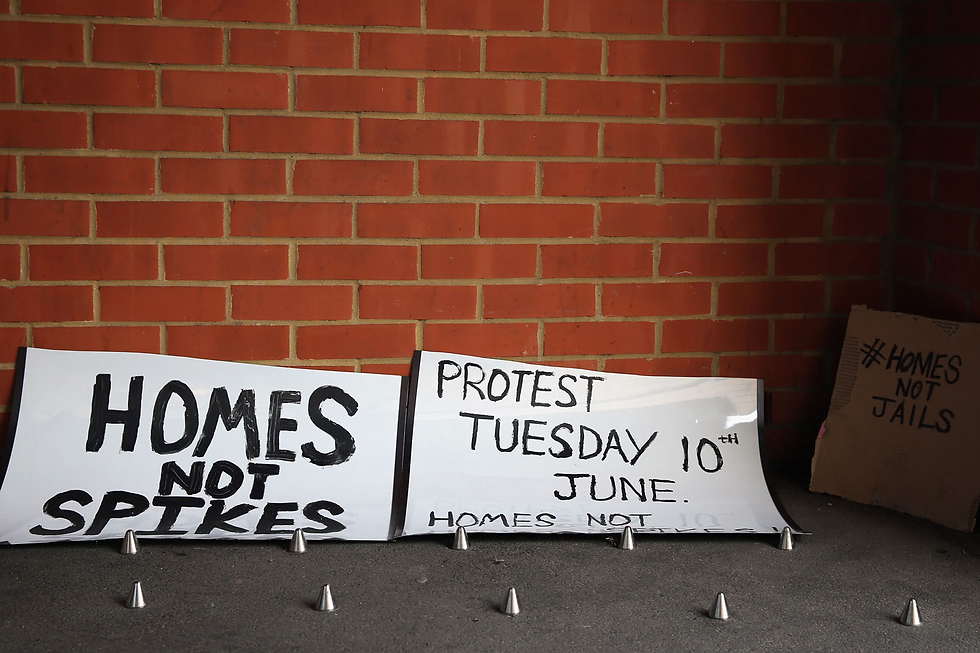
The public perception towards hostile architecture is predominantly negative, as it is widely viewed as a manifestation of urban exclusionism that disproportionately targets marginalised populations (Ferreira da Silva, 2021). Often referred to as defensive architecture, these design interventions have sparked outrage among activists and the general population for being perceived as an assault on the most vulnerable members of society (de Fine Licht, 2020). Instances like the controversy over 'anti-homeless spikes' in London have fueled intense public scrutiny and debate, prompting questions about whether such measures signify resistance to urban securitisation or reflect a broader disdain for the homeless (Carr, 2020). Critics like James Petty argue that defensive architecture, while intended to create safer environments for city investors and consumers, ultimately results in the creation of hostile spaces that are inhospitable to the homeless; highlighting the urgent need for further research and critical reflection on the ethical implications of these designs practices (Petty, 2016).
"A lot of times city planners get blamed for this, but in fact, it’s oftentimes not city planners that are deciding to add hostile architecture. Rather, it’s the absence of mechanisms within city planning to deal with it (Brodie, 2024)."
Conclusion
All in all, hostile architecture represents a misguided approach to addressing urban challenges, with significant financial and moral costs; while cities invest resources in these measures, the underlying issues of homelessness and inequality remain unaddressed. Furthermore, hostile architecture is widely perceived negatively by the general public as an insult to the rights and dignity of oppressed groups, while critics have pointed out that rather than promoting welcoming and supportive communities, many design initiatives produce hostile environments that further marginalise vulnerable people. Thus, it is important that decision-makers and planners provide the proactive solutions that address the underlying causes of homelessness and advance social justice to a higher priority than the implementation of hostile architecture. Ultimately, by redirecting resources towards initiatives that provide meaningful support and assistance to those experiencing homelessness, cities can move towards creating a more equitable urban environment for all.
(Brennecke, 2023)
Comments