
The Human Cost of Hostile Architecture
- David Cruzat
- Apr 24, 2024
- 3 min read

Updated: Apr 28, 2024
Hostile architecture isn't just about metal spikes on benches or angled surfaces - it's about the lives it touches and the dignity it strips away (Hirschler, 2021). In the UK, the number of homeless individuals is on the rise, with statistics showing that number of people sleeping rough is now 61% higher than it was ten years ago and 12% higher than when data collection began in 2010 (GOV.UK, 2024). Thus, more people find themselves on the streets due to various challenges, However, these challenges don't end there - those who are experiencing homelessness are often met with another obstacle, one that takes a toll on them mentally and physically: hostile architecture. In this blog, we'll delve into the personal stories and experiences of those affected by hostile architecture. From homeless individuals and their voices to shed light on the emotional and psychological toll of exclusionary design strategies.
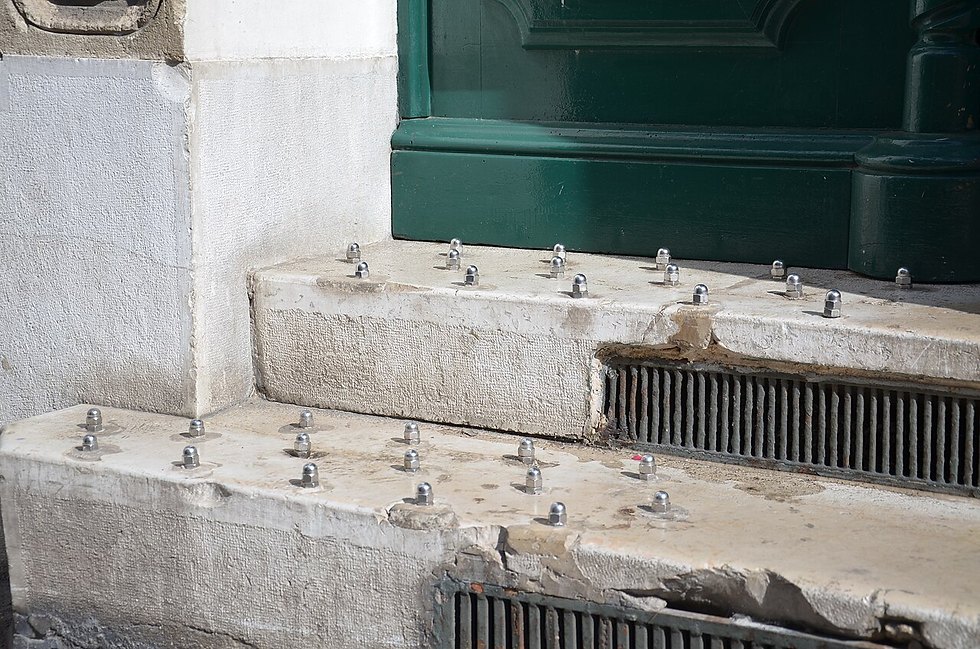
Photograph of hostile architecture in the form of bolts on the front steps of a building to discourage sitting and sleeping in Marseille, France (DC, 2011).
The Invisible Wounds
Meet Sarah, a young woman who found herself homeless after losing her job during the pandemic. However, her experience quickly turned sour as she encountered the harsh reality of hostile architecture.
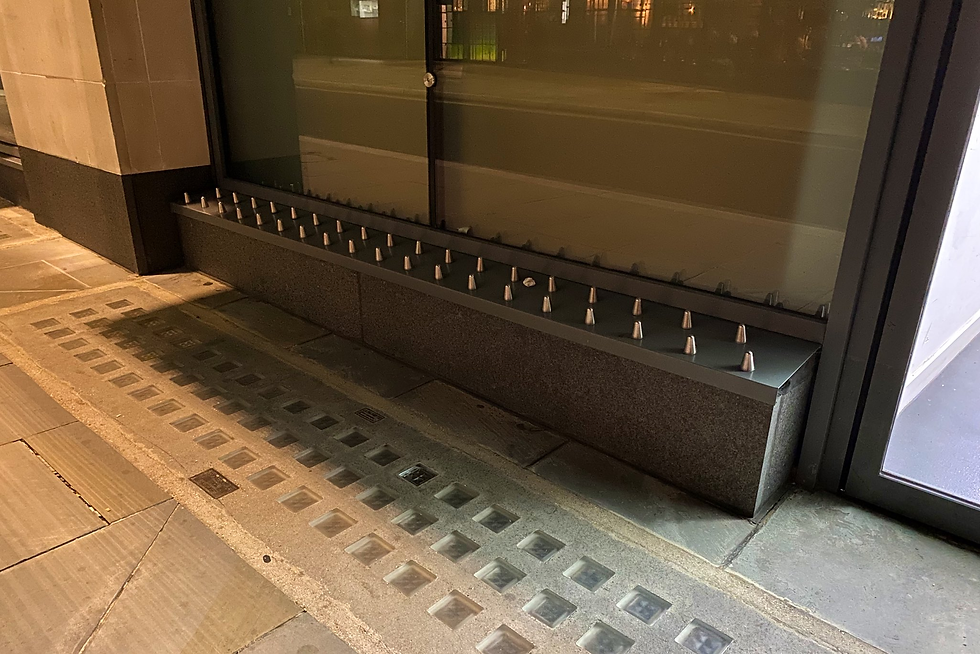
Walking through the city streets, Sarah sought refuge on a public bench, only to discover that many of the benches had been outfitted with anti-homeless spikes and dividers, which served as a stark reminder of her status as an outsider - and unwanted presence in spaces she once considered as her own. Sarah couldn't escape the sense of humiliation that washed over her as she was displaced from, yet another public space designed to exclude vulnerable individuals like her.
"It was as if the city itself was telling me, 'You don't belong here.' I realised just how invisible and unwanted I truly was."
Sarah's story echoes the experiences of countless others who have been marginalised by hostile architecture, with research from scholars such as Gaurang Kakkar has documented the psychological impact of exclusionary design on homeless individuals, highlighting the feelings of rejection and isolation that results from being systematically pushed out of public spaces (Kakkar, 2022). Similarly, Karthik Chadalavada and E Sripadma Sanjiv explains that hostile practice creates a devastating psychological effect on the homeless and further argues how an intervention to make the cities' investors and consumers feel safe in turn creates hostile environments (Chadalavada and Sanjiv, 2020).
Photograph by Barry Pomeroy of benches built in a hostile design to make sure no one can lay on them and rest (Pomeroy, 2016).
Moving Forward
In Sarah's story, we see the tangible effects of hostile architecture on the vulnerable population who are already facing personal challenges. The physical barriers may be visible, but it's the emotional scars that leave the deepest wounds. As we reflect on Sarah's experience and the research that underscores the psychological toll of exclusionary design, it becomes clear that hostile architecture is not just about metal spikes or dividers, it’s about the erosion of dignity and the catalysing of social inequality. This blog highlights the importance of continuing to amplify the voices of those affected to prioritise the well-being and dignity of all individuals. Together, let's work towards creating cities that are truly inclusive and welcoming for everyone.
Comments